
How to Judge Clothing Quality Before You Buy

Judge stylish clothes by checking the fiber label, seams, closures, fit, and care instructions—not by price or appearance alone. Compare what the garment is made of with how you plan to wear and wash it, then weigh those checks against its cost. A piece offers better long-term value when its construction, fit, and upkeep suit your routine.
How can I tell if a stylish piece of clothing is good quality?
Check its fabric information, construction, closures, fit, and care needs together; no single feature proves quality. Kansas State University Research and Extension makes the useful point that quality can be found at any price level. Treat the price as one part of the decision, not a shortcut for inspecting the garment.
Start with the label. The Federal Trade Commission’s textile labeling guidance says most covered textile and wool products must identify fiber content, country of origin, and the manufacturer or another responsible business. Fiber content is generally listed by weight in descending order; fibers below 5% are usually grouped as “other fiber,” with some exceptions. Look for legible, conspicuous information, which may appear alongside care instructions.
Next, inspect how the garment is assembled. Kansas State University recommends checking that seams are securely sewn and that stitching resists popping when gently tugged. Overcast seam finishing can help prevent fraying when correctly sewn. Check buttons and zippers for secure attachment and smooth function; these small details are easy to assess before purchase and can reveal whether the garment’s construction matches its price.
Then test the fit through movement. Sit, walk, and bend in the garment, as the Kansas State guide advises. Notice whether it pulls, shifts uncomfortably, or needs adjustment. A good-looking fit in front of a mirror is only one position; movement shows whether the piece works in ordinary use.
Finally, weigh care burden against likely use. The FTC’s Care Labeling Rule guidance explains that manufacturers and importers must provide complete care instructions or warnings when a garment cannot be cleaned without harm. A “Dryclean Only” claim requires a reliable basis that washing would harm the garment. If the required care is more effort than you will realistically provide, that garment may be poor value for your routine even if its construction looks sound.
What should I check before buying clothes online?
Before buying online, verify the listed fiber content and care instructions, study the available construction details, and use the seller’s fit information to decide whether the garment suits your needs. The source material does not provide standard sizing rules, return policies, or a universal online inspection method, so use only the details actually published for the item.
- Read the composition. Check the fiber percentages and identify whether the listed blend fits your intended use. Fiber order is generally by weight, not a ranking of durability or comfort, so do not treat the first-listed fiber as a complete quality verdict.
- Find the care instructions. Translate the label into a practical question: will you follow these instructions consistently? Care directions should have a reasonable basis supported by reliable evidence, according to the FTC, but the label still tells you what handling the garment calls for.
- Look for construction evidence. Product photos or descriptions may show seams, hems, buttons, and zippers. If those details are not visible or described, mark them as unknown rather than assuming they are well made.
- Assess fit using published information. Compare the listed measurements and fit description with your needs, where available. Public data in the provided sources does not establish a universal size conversion or guarantee how a particular cut will fit.
- Compare total value. Consider price alongside likely frequency of wear and care demands. Cost per wear can be a useful personal comparison—purchase price divided by the number of times you expect to wear the item—but the sources provide no standard wear count or price benchmark. Treat your estimate as a decision aid, not a sourced prediction.
For an in-store purchase, apply the same checks directly: read the label, gently test seams, operate closures, and move in the garment. Online, the same checklist becomes a test of what the product page actually tells you. Missing information is a reason to pause, not a reason to fill the gap with a guess.
Which fabrics hold up best to frequent washing?
The available sources do not establish a universal ranking of fibers that hold up best to frequent washing. They show instead that performance depends on the garment and the failure being considered: pilling, color loss, dimensional change, spirality, and seam problems can appear at different rates. Check the care label and judge the garment’s construction and wash performance information where it is provided.
WRAP’s Clothing Longevity Protocol identifies fading and pilling as common garment-failure problems. It also lists fraying or thinning fabric, worn trouser crotches, shirt-collar discoloration, and holes in seams. These are practical inspection targets: consider which failure would matter most for the way you plan to use the garment.
The wash-cycle examples show why one early wash is not enough to prove durability. WRAP reports that repeated tests of up to 50 cycles helped reveal failures that did not appear in early washes: knitwear pilling was significant by the 10th wash, while significant jeans color loss appeared after the 20th. Nottingham Trent University’s Centre for Sustainable Consumption and Production describes the same protocol’s tests, reporting significant knitwear pilling by wash 10 and jeans color loss after wash 20; shirts showed no significant deterioration after 40 washes in those reported tests.
Those results describe particular tested garments, not a guarantee about every sweater, pair of jeans, or shirt. The protocol recommends assessing physical performance such as pilling, dimensional stability, and colorfastness, and it includes wearer trials because real wearing and laundering reveal effects that lab tests alone may not capture. When a retailer publishes relevant test data, use it to compare like with like; when it does not, do not infer wash life from fiber name alone.
| Option | Who it suits | Cost | Key limitation |
|---|---|---|---|
| Knitwear | Shoppers who can assess pilling risk and follow the listed care instructions | not published | Significant pilling was reported by the 10th wash in cited tests; results are not a guarantee for every garment |
| Jeans | Shoppers who want to check color retention and construction before frequent laundering | not published | Significant color loss was reported after the 20th wash in cited tests; specific garment results can differ |
| Shirts | Shoppers comparing garments for repeated washing | not published | No significant deterioration after 40 washes was reported in the cited tests; this does not guarantee every shirt will perform the same |
Use the table as a prompt for questions, not a product ranking. To compare two actual garments, put their published fiber content, care requirements, construction details, available wash-test evidence, and prices side by side. If a detail is absent, record “not published.” That keeps the decision grounded in evidence instead of turning a category-level result into a promise.
Frequently Asked Questions
Are expensive clothes always better quality?
No. Kansas State University Research and Extension notes that quality can be found at any price level, so price alone is not a reliable quality test. Check construction, fit, fabric information, and care needs against the price instead.
How do I know whether trendy clothes will last more than one season?
No label can guarantee that a trend will stay in style. For physical durability, inspect construction and consider that wear problems such as pilling, fading, and seam damage may emerge after repeated washing, not just initial inspection. Choose a garment whose fit and care requirements make sense for your routine.
Before your next purchase, write down the garment’s fiber content, care requirement, construction checks, fit result, and price. Then ask one practical question: will this piece earn enough real use to justify the cost and upkeep?
Sources
- Federal Trade Commission, Threading Your Way Through Labeling Requirements Under the Textile and Wool Acts
- Federal Trade Commission, Clothes Captioning: Complying with the Care Labeling Rule
- WRAP, Clothing Longevity Protocol
- Kansas State University Research and Extension, Essential Living Skills: Apparel Management
- Nottingham Trent University, Centre for Sustainable Consumption and Production, Clothing Longevity Protocol
Read next
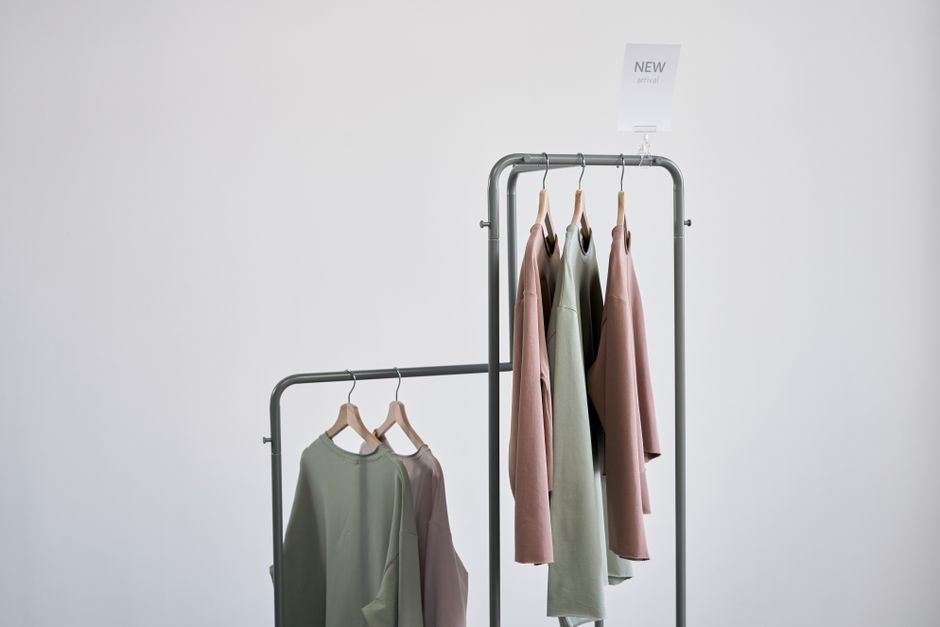
How Can I Evaluate New-Arrival Clothing Online Before Buying?
A practical way to check fit, fabric, styling value, and return risk before ordering new-arrival clothing online.

Large TV Stand for 85 Inch TV: 7 Checks Before You Buy
Measure your 85-inch TV’s feet and weight, then verify the console’s usable surface and top-load rating before buying.

Choose the Right iPhone Before You Switch
Choose an iPhone for an Android switch with clear checks for storage, eSIM, carrier fit, data transfer, and certified refurbished devices.

How Can I Build Polished Everyday Outfits From a Small Wardrobe?
Use repeatable outfit formulas, proportion balance, and a wardrobe-gap audit to create polished looks without buying complete new outfits.