
How Do I Make a Bathroom Look Current Without Dating It?
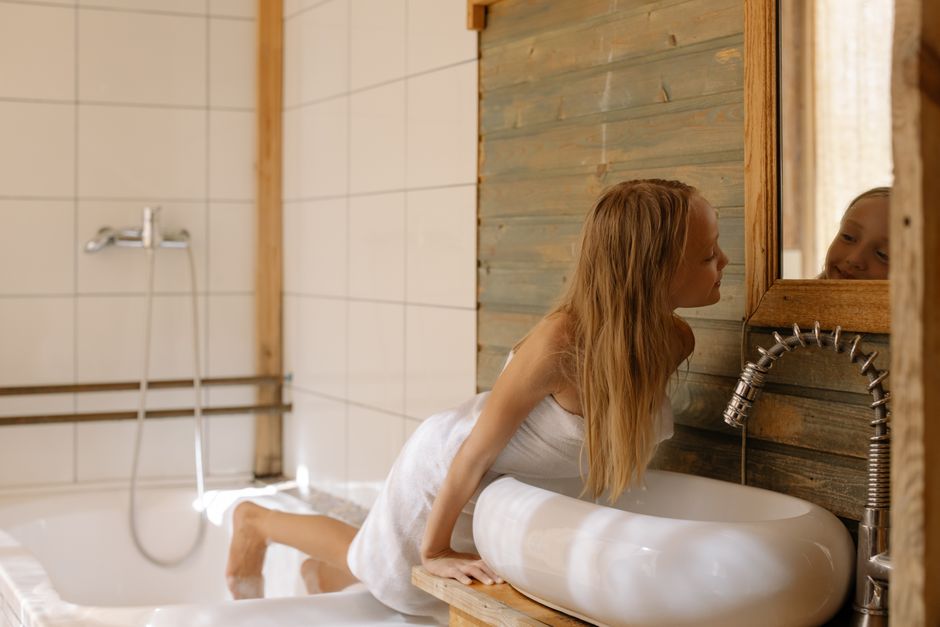
Keep the costly, hard-to-replace parts calm: a simple layout, warm neutral tile, reliable storage, layered lighting, and safe shower entry. Put the bolder current look in paint, mirrors, hardware, textiles, and one contained accent surface. A bathroom stays current when its structure serves daily life and its trend layer can leave without taking the room apart.
Which bathroom trends are worth the money in 2026?
The trends worth paying for are the ones that improve use every day: layered lighting, storage within reach, easy-clean surfaces, safe shower entry, and a warm, natural base.
The National Kitchen & Bath Association's 2025 Bath Trends Report draws on feedback from 500 North American kitchen-and-bath professionals. It identifies a "calm, warm, and natural" direction and puts varied lighting, accessible storage, and lower upkeep among functional priorities. Those are not seasonal decorations. They shape how the room works each morning and night.
Spend the most thought on decisions that create demolition when changed. Tile coverage, shower placement, wall openings, plumbing locations, vanity size, and built-in niches belong in this group. Select a simple base that can carry different fixture finishes, wall colors, and accessories over time.
| Decision | Best role | Planning test |
|---|---|---|
| Main floor and wall tile | Durable background | Will it still work if the mirror and fixtures change? |
| Shower layout and entry | Daily function and future access | Is the path stable, open, and easy to clean? |
| Lighting and storage | Daily-use infrastructure | Does each task have light and nearby storage? |
| Paint, hardware, mirror, textiles | Current expression | Can it change without disturbing tile or plumbing? |
| Accent wall or niche backing | Contained visual risk | Does the pattern stop in one clear place? |
Safety belongs with function, not in a separate column. The Centers for Disease Control and Prevention estimated 234,094 nonfatal bathroom injuries treated in U.S. emergency departments in 2008 among people age 15 and older. Falls caused 81.1% of those injuries, and about two-thirds occurred in a tub or shower. Traction and shower entry are design choices with consequences.
How can I make a new bathroom look current but not dated?
Make the room current through contrast and texture, not through a permanent theme.
Start with a restrained field: warm neutral porcelain, a stone-look surface, or another finish that does not demand a matching trend around it. Then add one point of tension. A dark tap set, brass hardware, a shaped mirror, a textured tile inside a niche, or a painted wall can give the room its present-tense character.
The rule is simple. The bolder the choice, the smaller the area.
Houzz's 2025 U.S. Bathroom Trends Study surveyed 1,738 U.S. Houzz users planning, undertaking, or recently completing a renovation. It found that 31% used accent walls. An accent wall is not automatically timeless. It is contained. Containment is what makes a strong pattern easier to live with and easier to change.
Layer the lighting before judging the finish. The NKBA report emphasizes varied lighting for different needs. Use light for the mirror task, the room at large, and the quieter parts of the day. A hard, single overhead source can make even good materials feel flat.
Do not force every current idea into one room. Texture can be current. Warmth can be current. A niche can be current. The room does not need all three as competing focal points. One clear idea reads as intentional. Five ideas read as a deadline.
Are large-format tiles a timeless choice for a bathroom?
Large-format tile is a durable option when its scale suits the room, the wet-area traction needs, and the installation plan.
In Houzz's study, 48% of wet-room renovators selected large-format tiles from 12 by 24 inches to 18 by 18 inches. Another 29% chose medium tiles from 6 by 6 inches to 12 by 12 inches. Among wet-room renovators, 50% said the selected format made better use of space, while 26% cited accessibility.
That data describes current renovation choices, not a universal rule. Large pieces can create a calmer visual field because there are fewer grout lines across the eye. They also put more weight on layout, cuts, slope, and edge details. A large tile that leaves thin, awkward cuts at a doorway or shower edge loses the clean effect it promised.
Use the floor separately from the walls when needed. The CDC's injury analysis points to wet-area safety as a real constraint. A shower floor needs traction and drainage; that requirement can favor a smaller format even when the walls use larger tile. The lasting choice is not one tile size. It is a surface plan that gives the floor grip and the room visual order.
Cleaning deserves equal weight. The NKBA report emphasizes minimizing upkeep and cleaning. Fewer grout lines can reduce the amount of grout to maintain, yet wide tiles and narrow spaces can create difficult cuts and joints. Ask to see the proposed layout before material is ordered. A tile sample tells one story. The cut plan tells the other.
What bathroom tile colors will still look good in 10 years?
Warm neutrals and natural stone-inspired tones give a bathroom the strongest long-term base because they support changing accents without locking the room into one era.
The NKBA's 2025 report names a calm, warm, natural aesthetic as a key direction. Use that signal where replacement is costly: floor tile, shower walls, vanity surrounds, and broad wall fields. Think in undertones rather than trend labels. A warm off-white, soft sand, muted taupe, or stone-like mix can sit behind black, brass, chrome, wood, or painted accents.
Cold gray is not forbidden. Deep green is not forbidden. The issue is reach. A saturated color across every wall gives one look control of the whole room. The same color inside a niche, on a small accent wall, or in a removable textile becomes a choice instead of a commitment.
Resale and future use belong in the same decision. The National Association of Home Builders reports that 88% of homeowners undertaking aging-in-place projects cited planning for future needs. Among remodelers, 93% reported installing grab bars in the prior year, 83% reported curbless showers, and 49% reported added or task lighting.
Build for the body first. Decorate the shell second. A calm tile field can hold both.
Frequently Asked Questions
Should I use trendy black fixtures or brushed brass in a bathroom remodel?
Use either finish when it fits the room, but treat the fixture finish as the changeable layer rather than the room's foundation. Keep permanent tile and layout restrained so a future fixture swap does not require a larger remodel. The NKBA's reported direction, "calm, warm, and natural - but still bold," supports warmth in durable choices while leaving room for a distinct accent.
Where can I add a trend without having to retile the bathroom later?
Use a painted wall, mirror, light fixture, hardware, towel, shower curtain, or a single accent wall. Houzz reports that 31% of renovators used accent walls, making one contained area a sensible place for strong pattern or color. Keep the rest of the tile field quiet and cohesive.
What design choices make a small bathroom feel more spacious?
Use a coherent tile field, adequate layered lighting, storage close to where it is used, and a shower layout with easy entry. Houzz found that 50% of wet-room renovators using large-format tile said the format made better use of space. Tile size is only one decision; a crowded floor plan and scattered storage still make a small room feel tight.